Genre: 80s and retro
The look of 80s film, directed shot by shot
An 80s style film borrows the decade's look, not its nostalgia. That means visible grain, halation around lamps, slow zooms instead of gimbal moves, wide frames and no smartphone in sight. Filmito, led by director Shivam, builds that world in its series Good Men, Bad Habits. It runs from an 80s Bollywood-style hero entrance to a night highway in a 1980s American crime mood. Every period detail is fixed in the script before an AI engine renders a single shot.
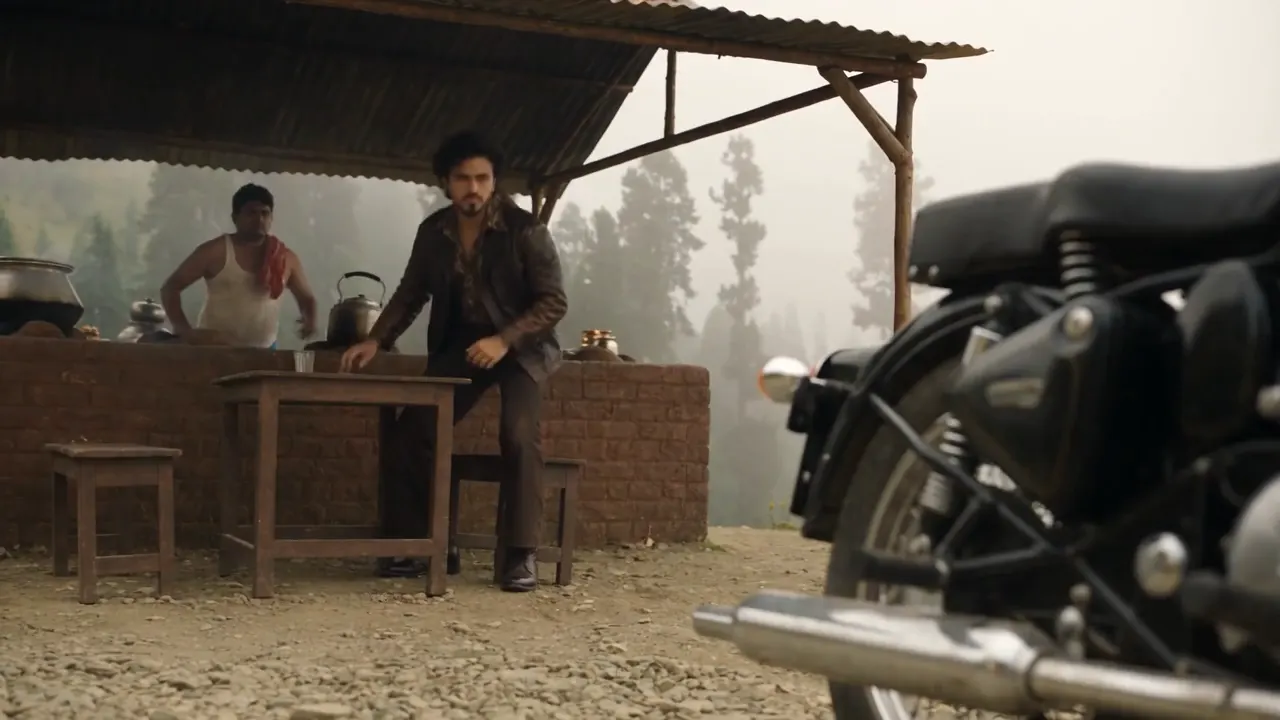
Good Men, Bad Habits began with a chai stall in misty hills and a black Ambassador. Seven street dogs there know Rudra, played by our director, by the sound of his Royal Enfield Bullet. Its first two episodes play as a retro Bollywood style video about crime, old cars and loud engines. The series has sixteen episodes so far. Much of the work is keeping the present out of frame.
The look is not a filter. It comes from choices a cinematographer of that decade would recognise. A lamp motivates the light, a zoom does the work of today's gimbal, a corded telephone sits on the desk. That is why 80s retro video production works for brands now. In a feed of clean, stabilised phone footage, grain and a slow zoom say someone made this with care.
Watch
3 films we made
Tap any film to play it with sound. Every one was written, directed, edited and graded by Filmito.
The grammar of an 80s frame
Grain and halation
Film stock of the period carried visible grain and a soft red glow, called halation, around bright lamps and headlights. Added lightly in the colour grade, grain gives texture and halation warms the highlights; pushed too far, both read as a cheap filter.
The zoom, not the gimbal
Eighties crews moved the camera on dollies, cranes and the odd Steadicam, and reframed with the zoom lens. No gimbals, no drones. A slow push-in on a face, or a snap zoom on a gun, reads as the decade at once; a floating drone move reads as now.
Motivated light, wide framing
Light came from things inside the scene or the sky: headlights on a night highway, a lamp in a window, a low sun on a hill road. Frames sat wider, the actor placed centre with air around him, and a hero's entrance was held long enough to land.
Costume, props, absences
An 80s frame is dressed by what it includes and what it refuses: an Ambassador, a Bullet, a cassette, a corded telephone, aviator sunglasses. No mobile phones, no LED screens, no earbuds. Every shot prompt carries a negative list, the place to name what must stay out.
Studio sound, or no score
Eighties Bollywood sound was built in the studio: dubbed dialogue, loud foley, a brass or synth sting on a hero's entrance. Episodes 1 and 2 go the other way: no music, only real sound. For a brand, either path works if made for that cut, not a stock loop.
How an 80s episode gets made
Write the world first
Before a shot exists, the script fixes the decade: which car, which bike, what people wear, where the light comes from. For a brand, it also decides where the product can honestly sit in that world.
Keep costumes in period
Period costume drifts as easily as faces: a collar turns modern, a jacket loses its cut. Each recurring face is fixed on a character sheet, from several angles and in costume, so it stays in the decade from shot to shot.
Write shots in period
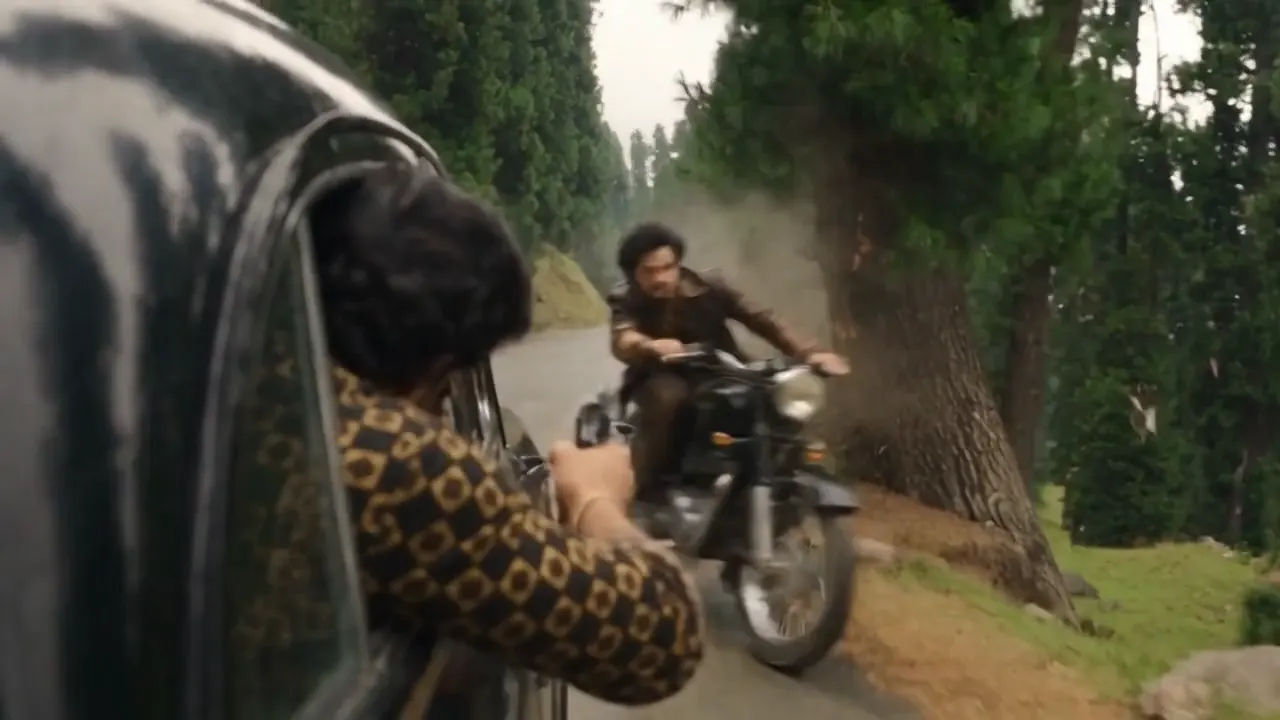
For Episode 2, the Ambassador against the Bullet, the mud and the gunshot were each written as a timestamped prompt with a negative list. Each shot then goes to the engine that suits it, whether Seedance, Kling or Google Veo.
Finish by hand
Every kept take is edited, colour graded and sound mixed by hand. The grade sets warmth and texture shot against shot. With no music in Episodes 1 and 2, the mix carries the Bullet's engine and the dogs.
What an 80s film costs
An 80s movie style commercial is $895 for 30 seconds, long enough for one hero entrance and one product reveal. A 15-second cut at $595 holds the entrance alone, and $1,495 buys 60 seconds for a small story. Each has a first cut in 3 days and two revision rounds. If you would rather be the hero yourself, a 30-second Filmito Original starring you is $350.
Where the retro look needs care
Period detail breaks easily. A generated shot can slip a modern car into the back of the frame, a smartwatch onto a wrist, or signage that turns to nonsense. So a frame has to be read edge to edge for the present, not only at its centre. Heavy grain can also bury a product label, so a packshot needs a lighter hand in the grade.
Questions
What people ask about 80s and retro films
Can a modern product appear in an 80s style film?
Yes, with one choice made early. Either the product appears as it is, lit a little cleaner, as a deliberate anachronism. Or the story wraps it in period objects: a steel tiffin, a cassette, a corded telephone. Mixing the two halfway is what makes a retro ad look cheap.
Do I need to supply period costumes, cars or locations?
No. The world is built from the script and reference images: cars like the Ambassador, bikes like the Bullet, a chai stall in the hills, a wooden pier at night. Photos of a real place or garment you care about help. For a Filmito Original, we ask only for 3 to 6 photos per face.
Is the film grain generated in the shot or added later?
Adding it later is the steadier choice. Grain generated inside a shot tends to shift from shot to shot, so it is safer laid on in the colour grade, with halation around lamps and headlights. Done in the grade, the texture holds steady across a 30-second cut and can ease off for a product close-up.
Should an 80s style ad be framed in 4:3?
Rarely. The decade's cinema was mostly widescreen, and 4:3 belongs to television and home video, which reads as VHS rather than film. Episode 1 was finished in 16:9 with a 4K master. A vertical version for feeds is a reframe of that wider image, so compose the key action near the centre from the start.
Does a retro Bollywood style video work for audiences outside India?
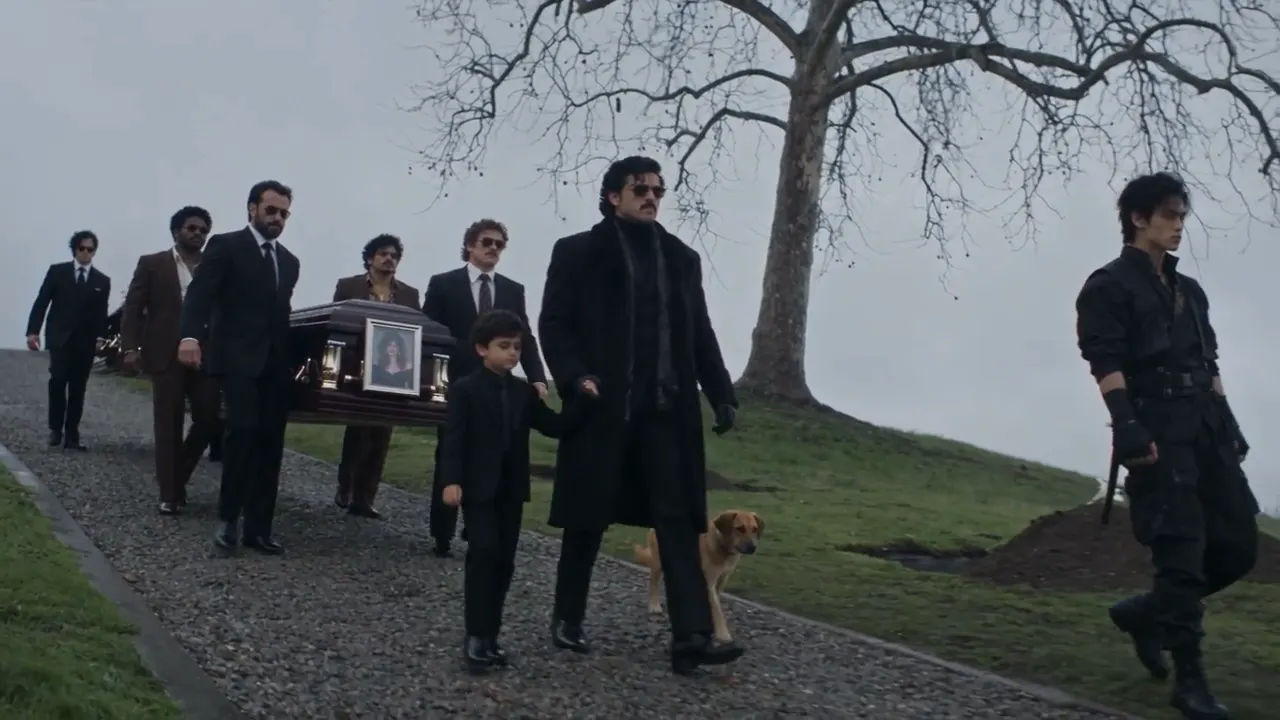
The grammar travels. Episode 15 of Good Men, Bad Habits moves to a 1980s American crime mood: a motorcycle and a black sedan on a night highway, headlights, a wooden pier. Grain, motivated light and zooms read as the 80s to most audiences, while props and faces change for the market you are speaking to.
How long should an 80s movie style commercial run?
Episodes 1, 2 and 15 of Good Men, Bad Habits run 27, 31 and 32 seconds, enough for an entrance, one turn and an ending. For ads, 30 seconds suits the style, since the decade's slower cutting needs room. A 15-second cut holds a single image, such as a hero's arrival, and 60 seconds holds a small story.
Filmito
Give your brand an 80s entrance
Send the product and the scene you picture. We will tell you which period details it needs, and which ones would bury the label.
Since 2017 · 9,700+ films · 4.8 from 970+ reviews on Fiverr