Craft: character design
Character design: one face, held from shot to shot
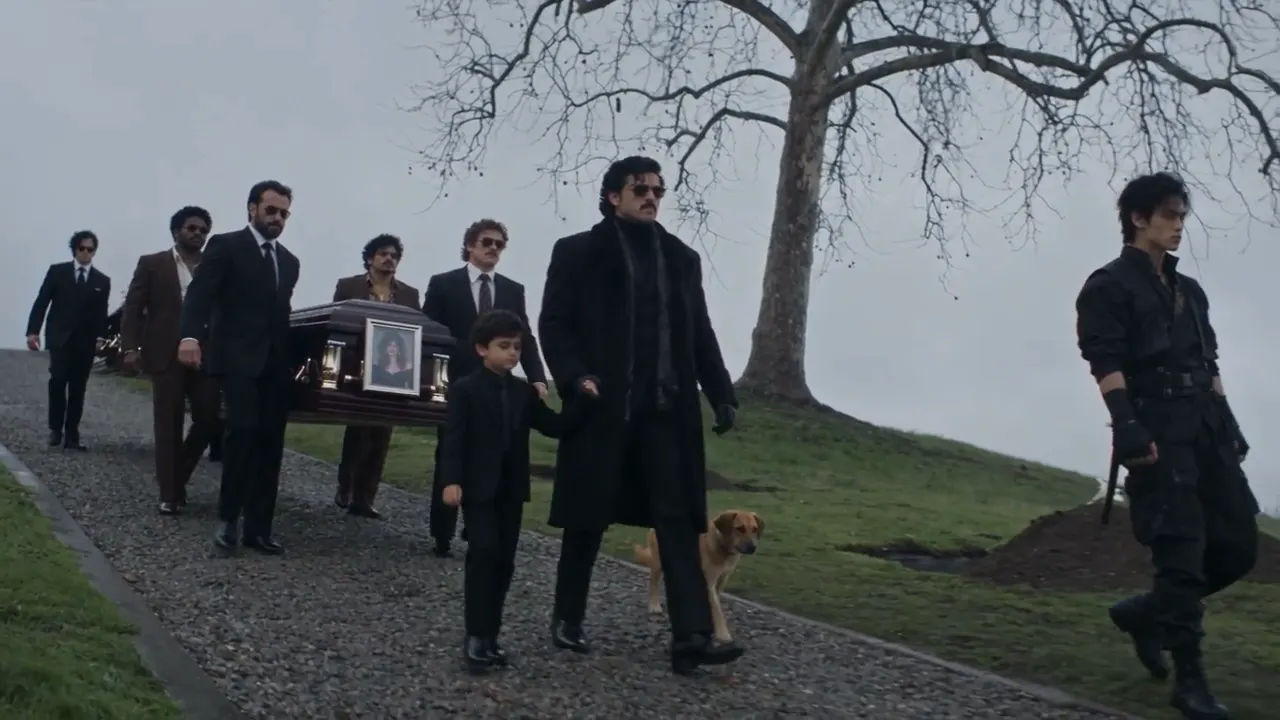
Character design, in AI filmmaking, is the work of fixing who someone is before any footage exists: face, build, costume, props, and how each reads from front, side and back. The director draws it up as a set of character sheets and locks them before generation. Episode 16 of Good Men, Bad Habits needed eight: seven people and Cosmo the dog. A ninth sheet fixed a gold case. Together they hold 34 seconds of rain and grief.
Audiences forgive a soft focus or a clumsy cut. They do not forgive a hero whose jaw changes between the wide and the close-up. A scar moves, a collar vanishes, a dog's patch jumps from the left ear to the right. Each one tells the viewer nobody is holding the film. Consistent AI characters are not a setting you switch on. They are a discipline done before the first frame.
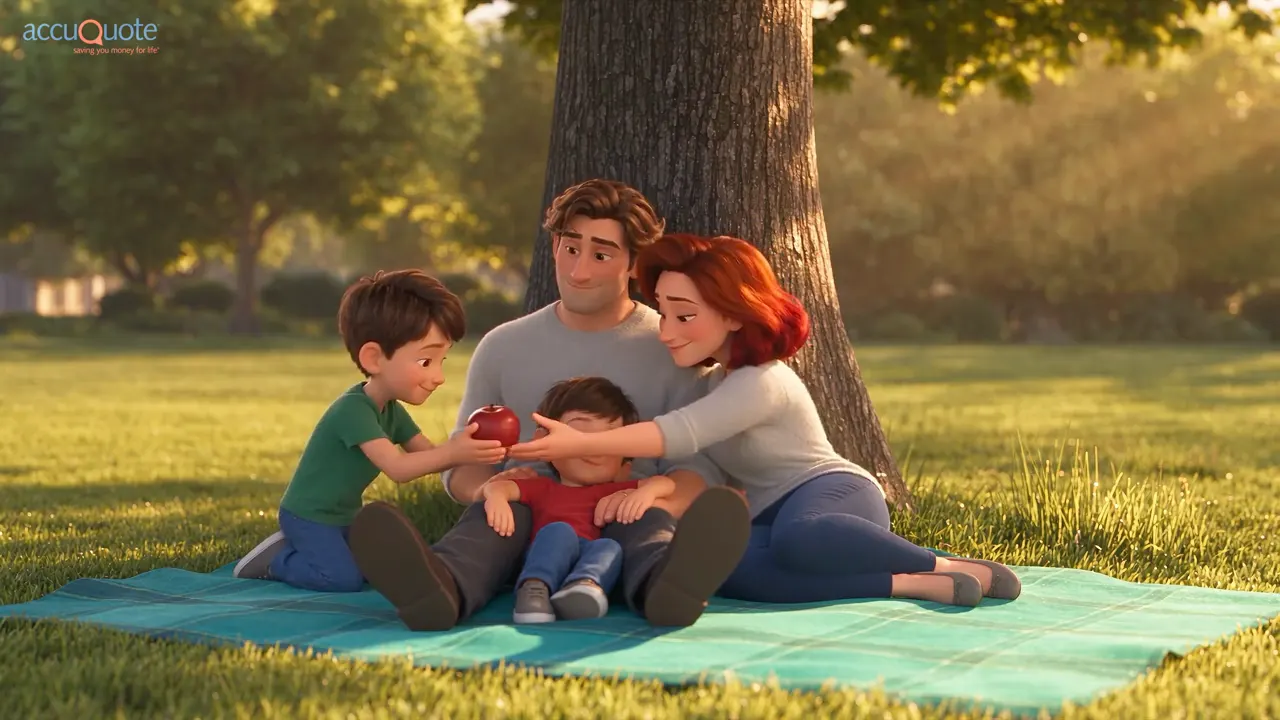
The discipline covers turnarounds, wardrobe and prop continuity, the care a real person's face demands, and the moment a product joins the cast. The examples come from Filmito's own work: Good Men, Bad Habits, where Rudra runs from Episode 1 to Episode 16, and a two-minute animated family for AccuQuote.
Watch
3 films we made
Tap any film to play it with sound. Every one was written, directed, edited and graded by Filmito.
The grammar of a consistent cast
The turnaround sheet
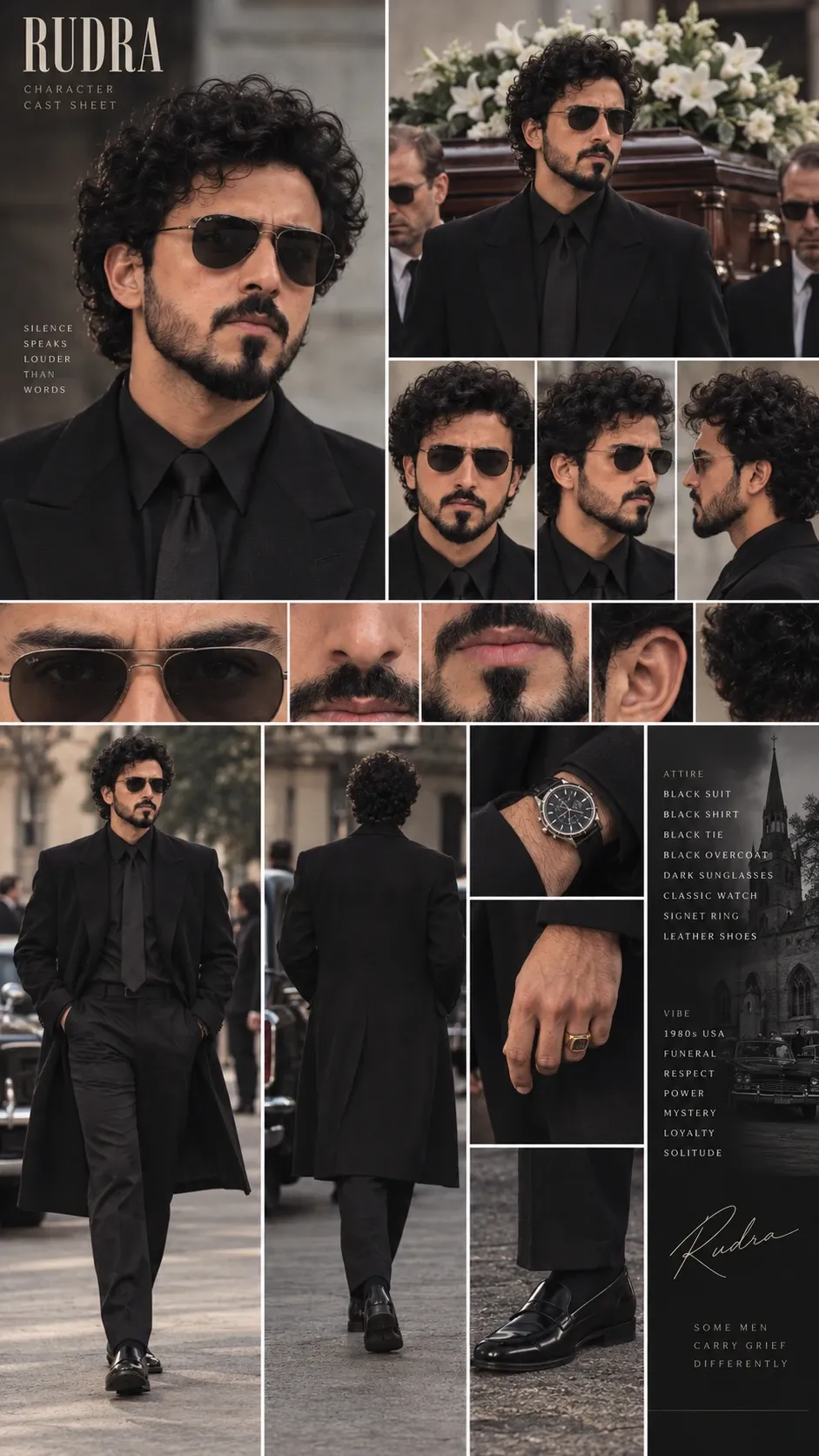
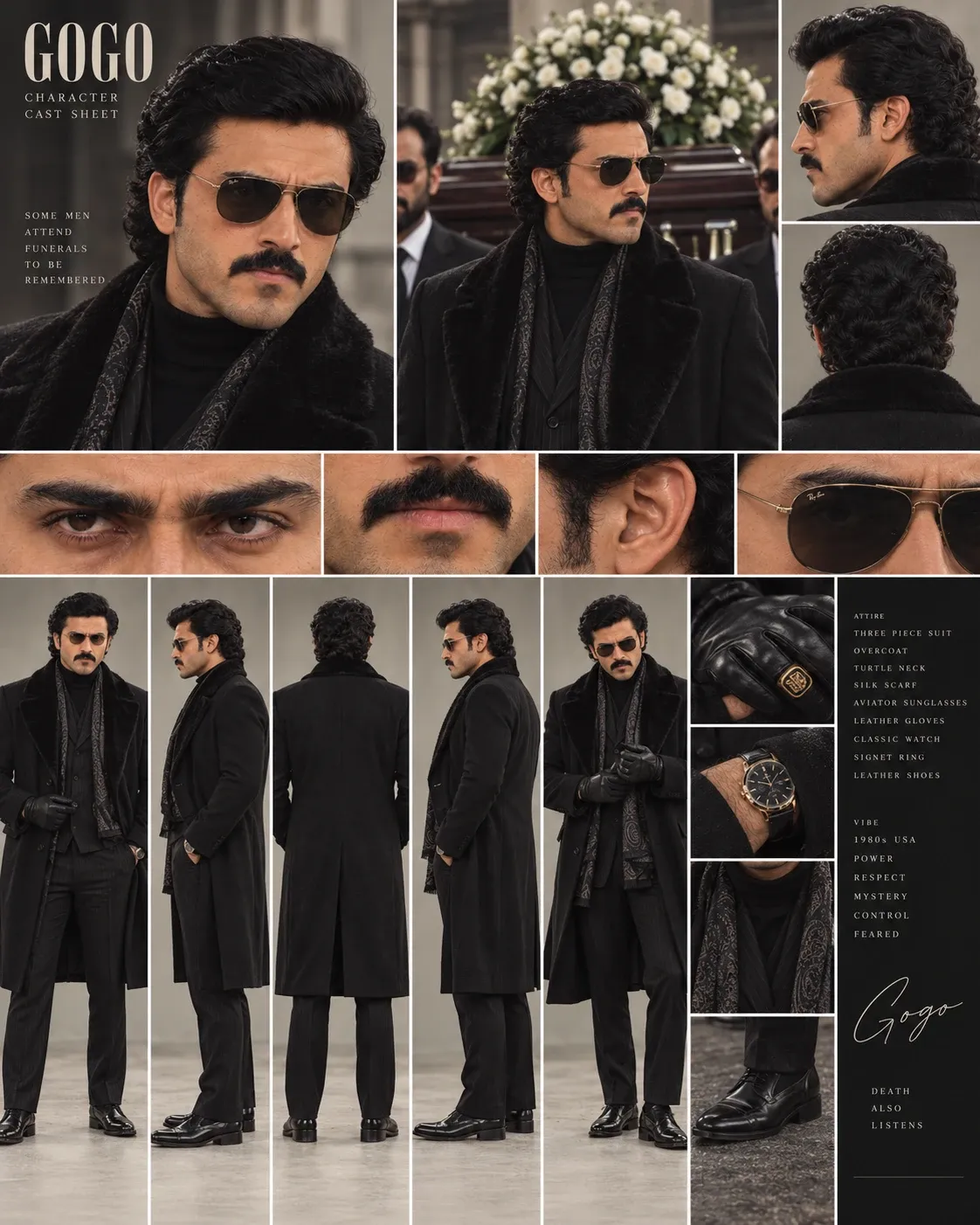
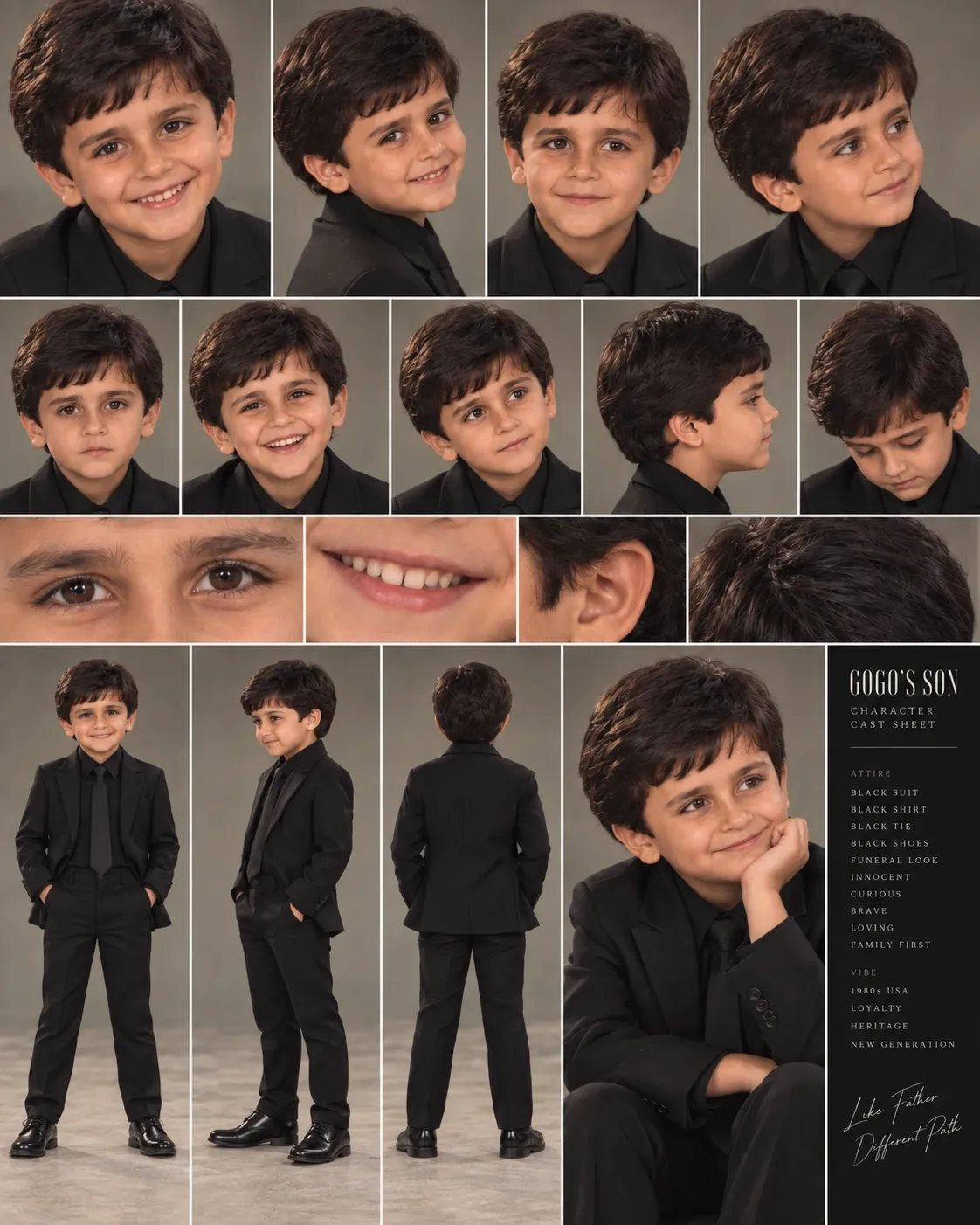
A turnaround shows one character front, three-quarter, profile and back, at the same scale and in flat light. It answers the questions a shot will ask later: how the nose sits in profile, where the hair parts, what the silhouette looks like walking away.
Costume in every state
Wardrobe is locked per scene, not just per film. A good sheet records each state of a costume: dry, soaked, sleeves rolled, sunglasses on or off. Episode 16 runs from a funeral in the rain to a rain-soaked night street, the kind of span where a collar drifts.
Props carry identity too
A recurring object needs its own sheet. Episode 16 had one for a gold case, in a film where gold keeps returning: a gold bar, a small case, cases opened at a meeting. A brand's can, bottle or phone is cast the same way, like an actor.
Animals drift the most
Coat pattern, ear shape, muzzle colour and size against a person all wander unless they are fixed. Episode 16 gave Cosmo the dog a sheet of his own, drawn with the same care as the seven people around him.
A shared rulebook
Character design for animation starts with a shared rulebook: proportions, eye size, how skin and fabric take light. Break it once and a character looks borrowed from another film. The AccuQuote family holds one warm feature-animation style, covered on the Animated films page.
Character sheets from Episode 16
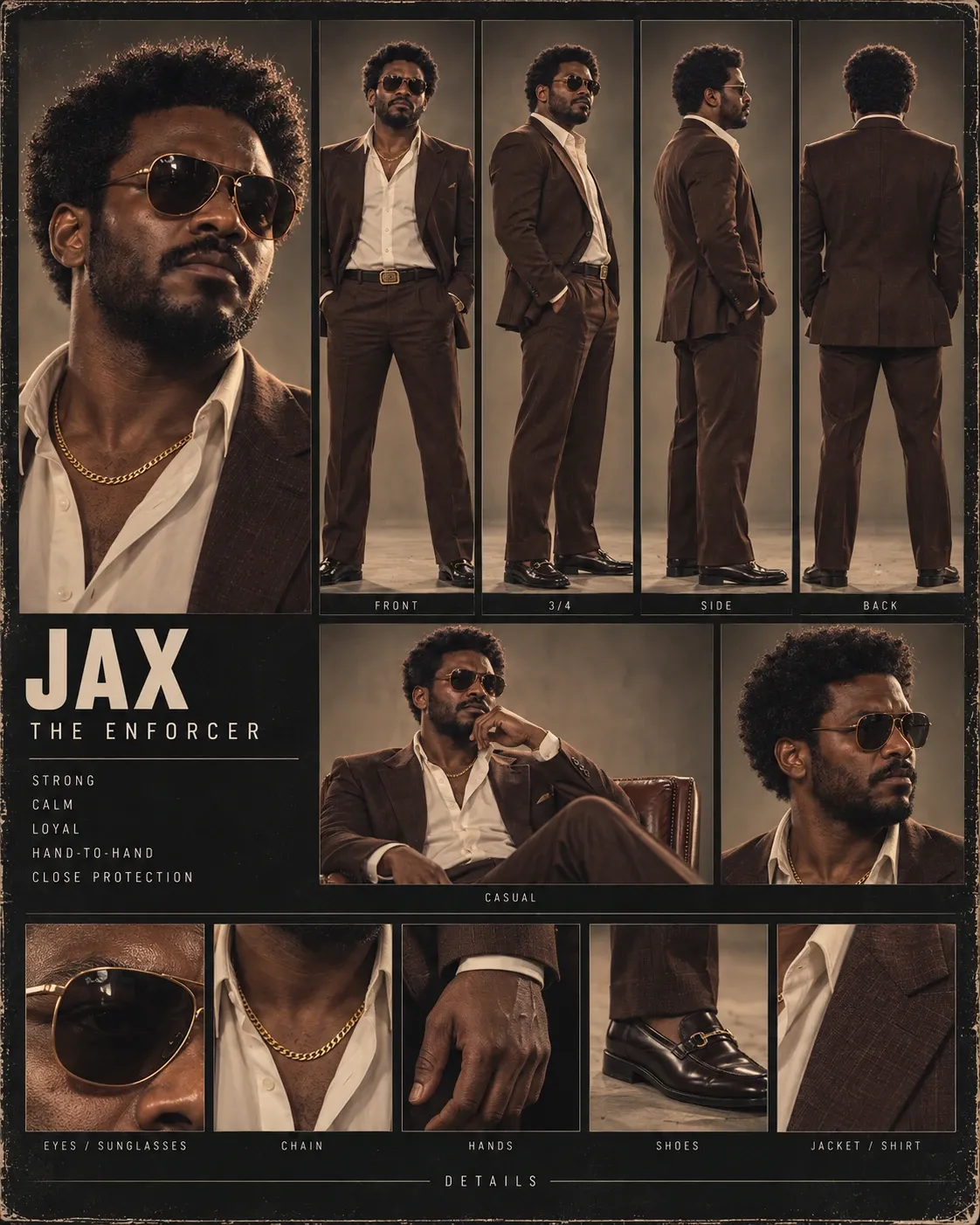
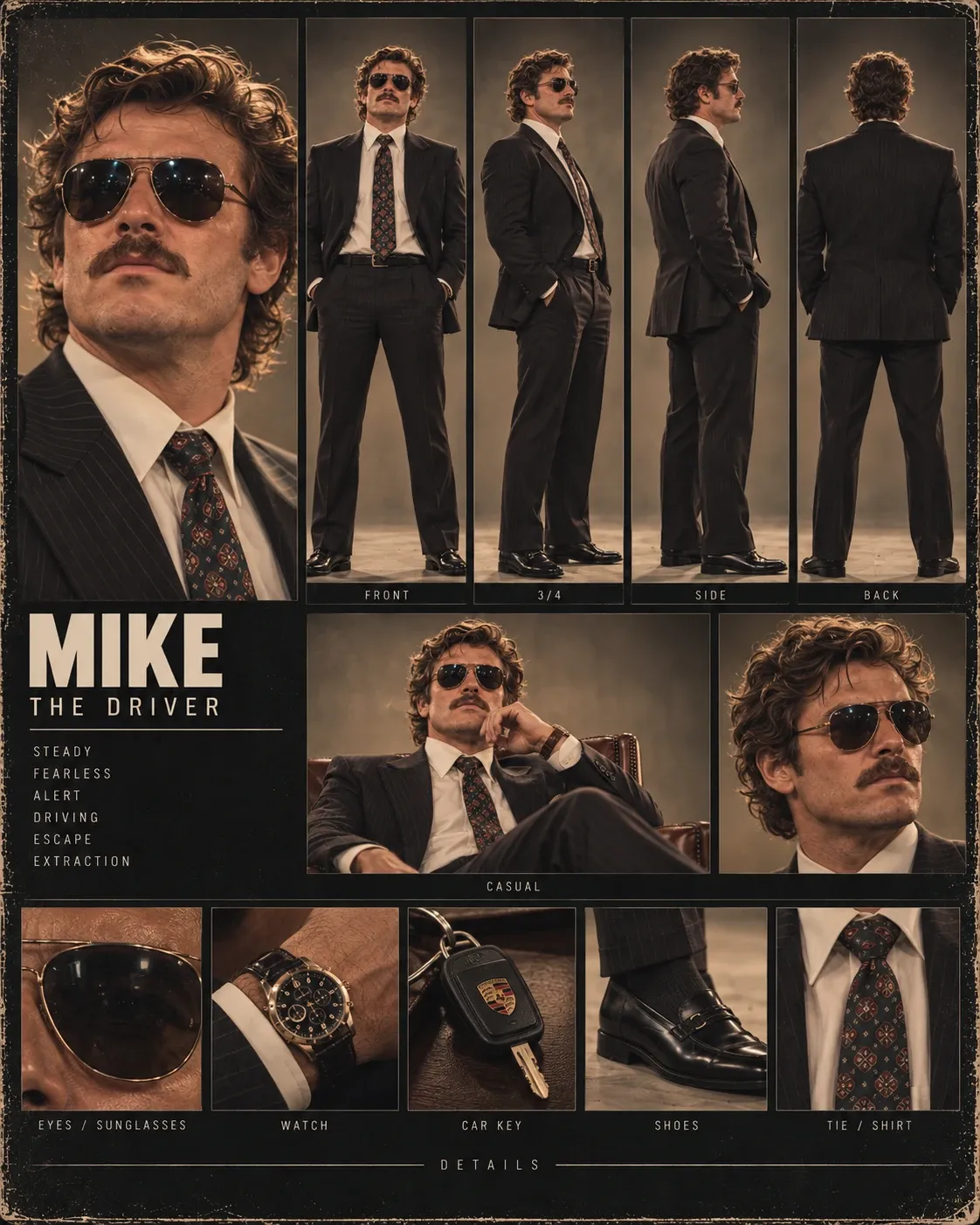
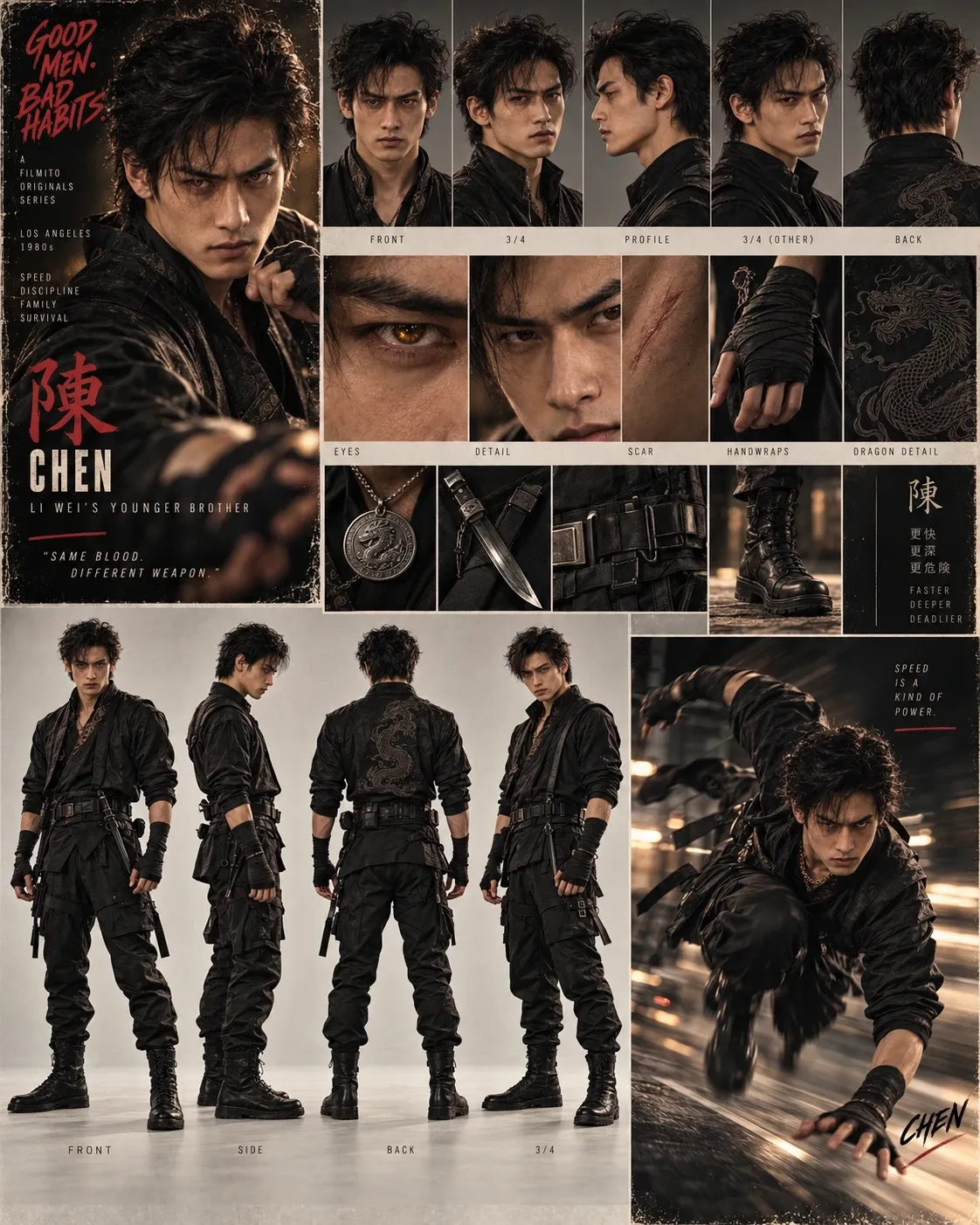
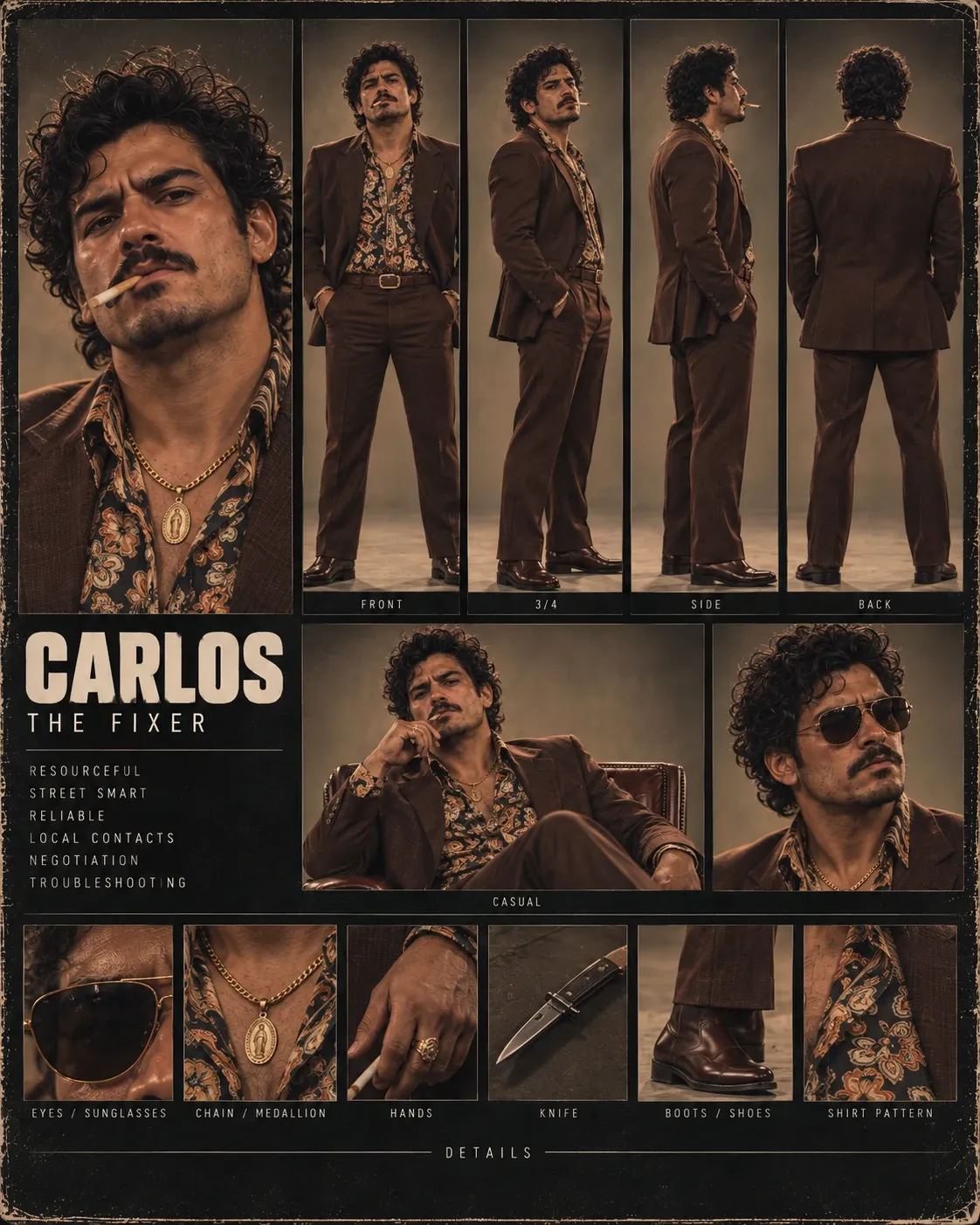
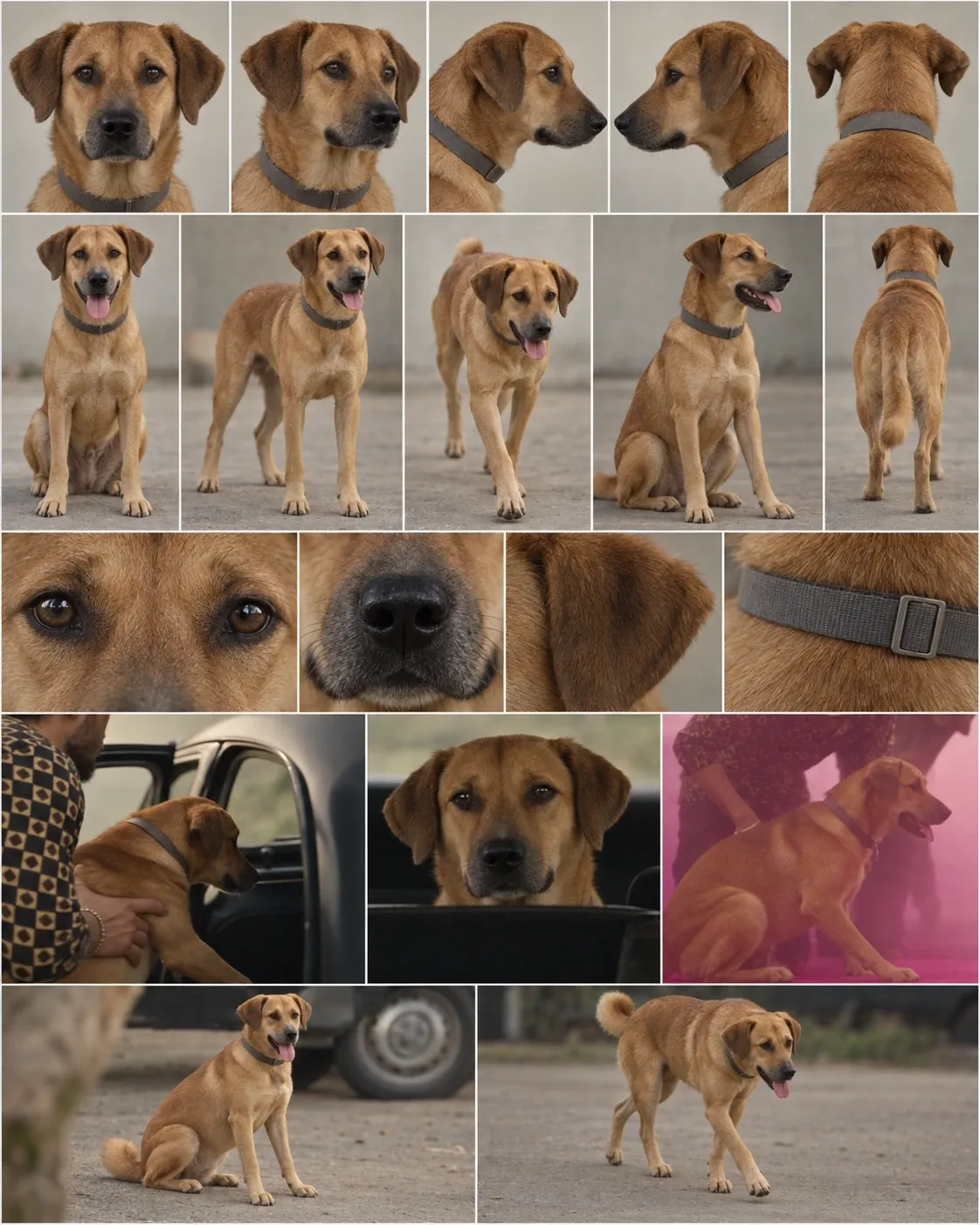
How a cast gets locked
Name the cast
The script lists every recurring face, animal and object before design starts, because each one that returns needs a fixed reference. For Episode 16 the list read Rudra, Gogo, Gogo's son, Jax, Mike, Chen, Carlos, Cosmo the dog and a gold case.
Build the sheets
Each character is drawn up from several angles and in costume, so a later shot never has to guess a profile or a sleeve. For a Filmito Originals film starring a real person, the sheets start from 3 to 6 photos of that face.
Lock, then generate
Sheets are frozen before a single shot is made, and nobody redesigns a face mid-production. Every shot prompt names which locked characters are in frame, so the engine is matching a sheet, not inventing a stranger.
Reject the drift
Most takes are thrown away. An eye a shade off, a ring on the wrong hand, a collar buttoned a shot ago: the take goes, however good the light. A take survives only when every face in it passes a side-by-side check against its sheet.
What a consistent cast costs
Sheets are not billed one by one. Episode 16 carried nine in 34 seconds, and a short ad might need two. The price follows the film: $595 for a 15-second ad, $895 for 30, $1,495 for 60, and $2,000 for a two-minute AI Film. A Filmito Original, 30 seconds with your own face on the sheets, is $350 from 3 to 6 photos per face.
Where consistency still needs a human eye
Every added character is another face to police: Episode 16 meant nine sheets to check against every take. Hands and rings wander often. A short film with too many recurring faces runs out of screen time before each one earns a beat. A real person's face is only cast with that person's consent. When a brief carries too many faces, we suggest cutting faces, not checks.
Questions
What people ask about character design and consistent casts
How do you keep an AI character's face the same across shots?
A character sheet is built and locked before any footage exists, showing the face from several angles and in costume. Every shot references that locked cast, and each take is compared against the sheet. Takes that drift, even slightly around the eyes or jaw, are rejected. That rejection is the real work of AI character consistency, and it happens before you see a cut.
Can my own face become a digital actor for commercials?
Yes, with your consent. For an ad, we build a digital character from your reference photos and lock it in character sheets like any other cast member. For a Filmito Originals film we ask for 3 to 6 photos per face. Rudra, the lead of Good Men, Bad Habits, is played by the director himself, cast from his own reference photos the same way yours would be.
What is a turnaround, and does an AI film need one?
A turnaround is the classic animation sheet: one character shown front, three-quarter, side and back at the same scale. AI films need it more than hand-drawn ones, because an engine will guess whatever you do not show it. The back of a head, the profile of a nose, the fall of a sleeve: if the sheet leaves them open, a shot will invent them.
Can a product be treated as a character in the film?
Yes, and it should be whenever it appears in more than one shot. A product gets a sheet like an actor: shape, label position, how its colour holds under warm and cool light. Be The Kaptaan, a 72-second epic, was built from one photo of a can. A drifting label is a continuity error, and on a brand film it is also the client's name gone wrong.
How many recurring characters can a film under a minute hold?
More than most people expect, if each one has a sheet. Episode 16 runs 34 seconds and holds eight locked characters plus a prop. The harder limits are screen time and drift: every extra face is another one to check in every take. Each face needs one clear beat, a look or a gesture, so the viewer knows who they are watching before the next cut.
What does a real face's sheet need that a cartoon's doesn't?
Three things. Consent first: we only cast a real person who has agreed to it. Then coverage: a Filmito Original starts from 3 to 6 photos per face, ideally in different angles and light, so the profile and the smile are not guessed. Then skin: pores, stubble and the small asymmetries a viewer knows, which a cartoon smooths away.
Filmito
Your cast, locked before the first shot
Who is in your film? A founder, a family, a dog, a product. We build the sheets, lock them, and hold every face to the last frame.
Since 2017 · 9,700+ films · 4.8 from 970+ reviews on Fiverr