Romance and love stories
Love stories told in thirty seconds
A romantic short film is a love story told almost without words: two people, one place, a light that flatters them, and the distance between them closing. A writer builds each one around a single gesture, AI engines render the couple from 3 to 6 photos per face, and an editor cuts and grades it. Our one finished romance so far is Episode 3 of Good Men, Bad Habits, 31 seconds long. A personal version costs $350 as a Filmito Original.
Romance is the genre that punishes excess. A love story film lives in small things: how long one person looks before the other notices, how far apart they stand, which way the sun falls across a face. Add a speech or a swelling chord too early and the feeling leaves the room. Thirty seconds is enough, if every frame holds back a little.
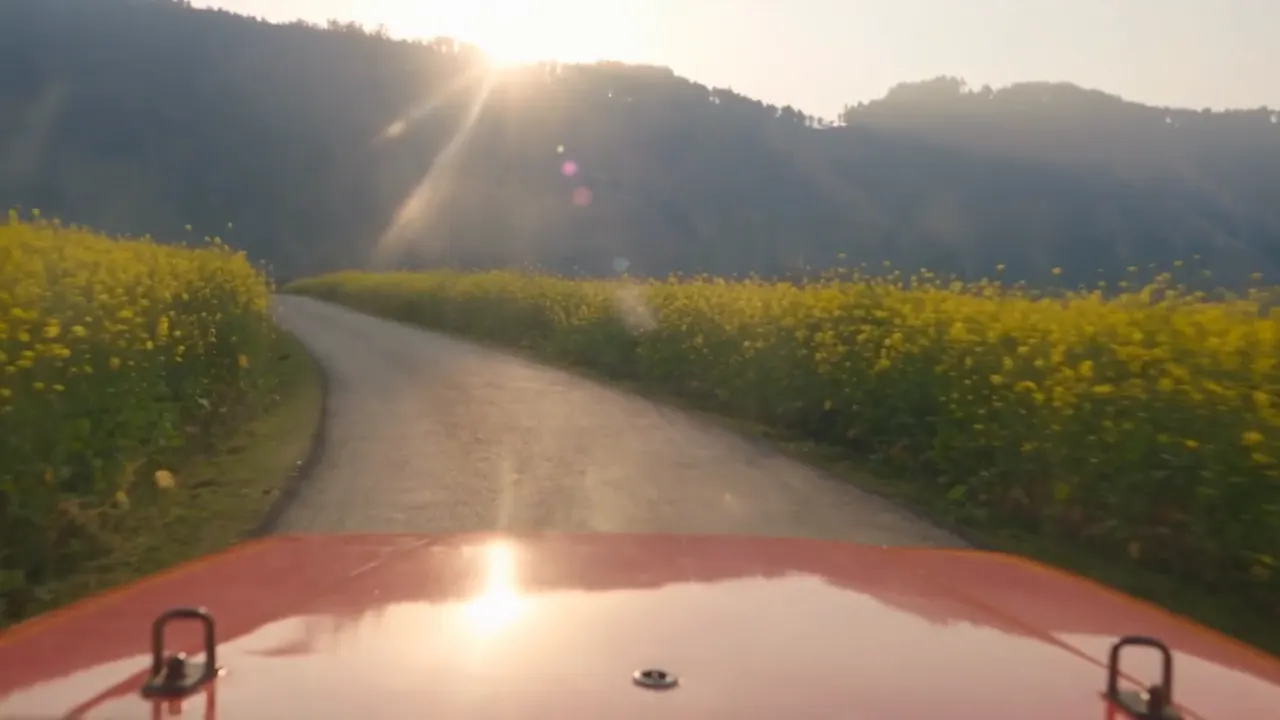
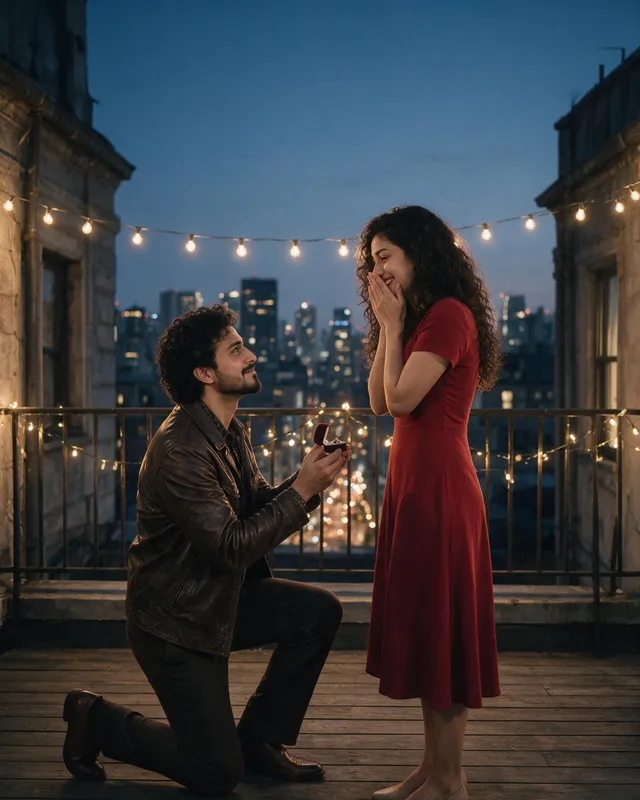
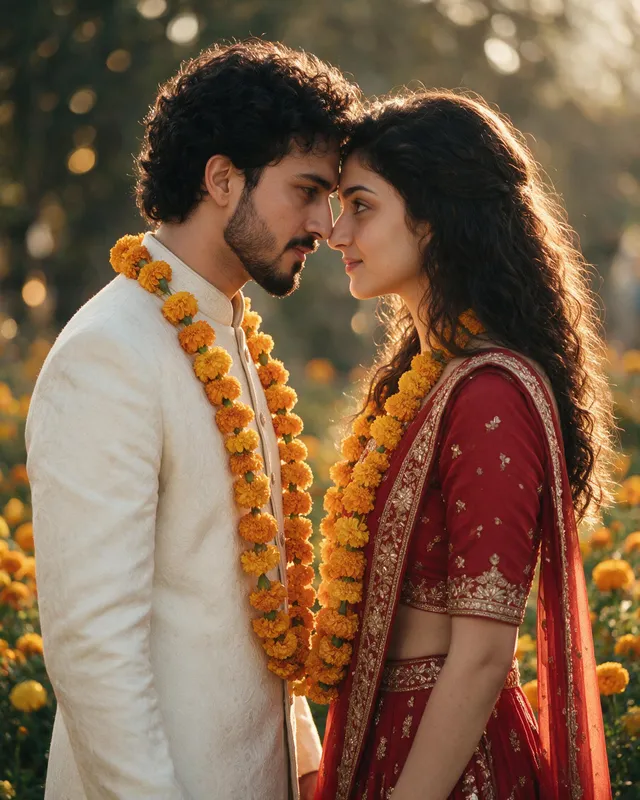
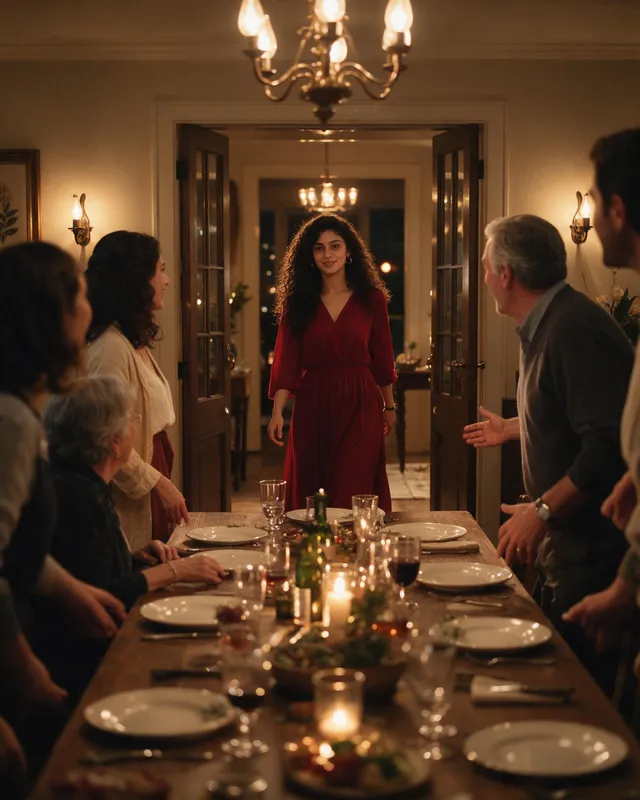
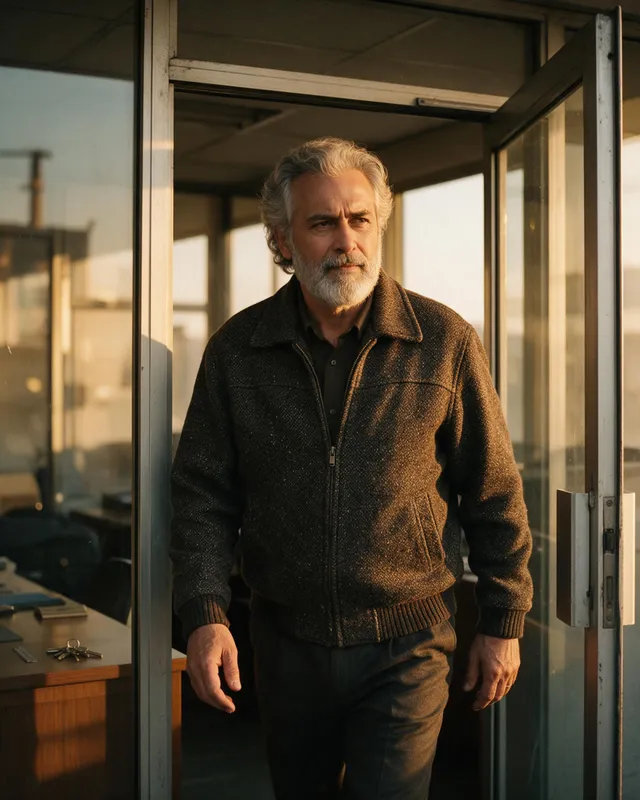
One finished romance film sits in our work today: Episode 3, mustard fields, a red jeep, Tara and Rudra, who is played by our director. Beside it sit two of our Filmito Originals stills of Rudra and Tara: a rooftop proposal at blue hour and a wedding portrait with marigolds. Couples commission a proposal video, or their story from the day they met, as a Filmito Original.
Watch
The film
Tap any film to play it with sound. Every one was written, directed, edited and graded by Filmito.
What makes romance work on screen
The look before the line
Romance is carried by eyeline. One person looks, the other almost looks back. Let the first look run until the second one arrives and the audience leans in. Cut away too soon and it reads as coincidence, not attraction.
Distance is the plot
Frame two people with space between them, then close it across the cut. A wide two-shot, a medium, finally a close-up where shoulders nearly touch. The shrinking gap is the story, and thirty seconds has room for exactly that.
Golden hour, blue hour
Low sun wraps faces and forgives skin, and Episode 3 plays at golden hour. Our rooftop proposal still sits at blue hour, cooler and quieter. For a couple, a longer lens around 85mm softens the background and keeps the two of them sharp.
One colour that matters
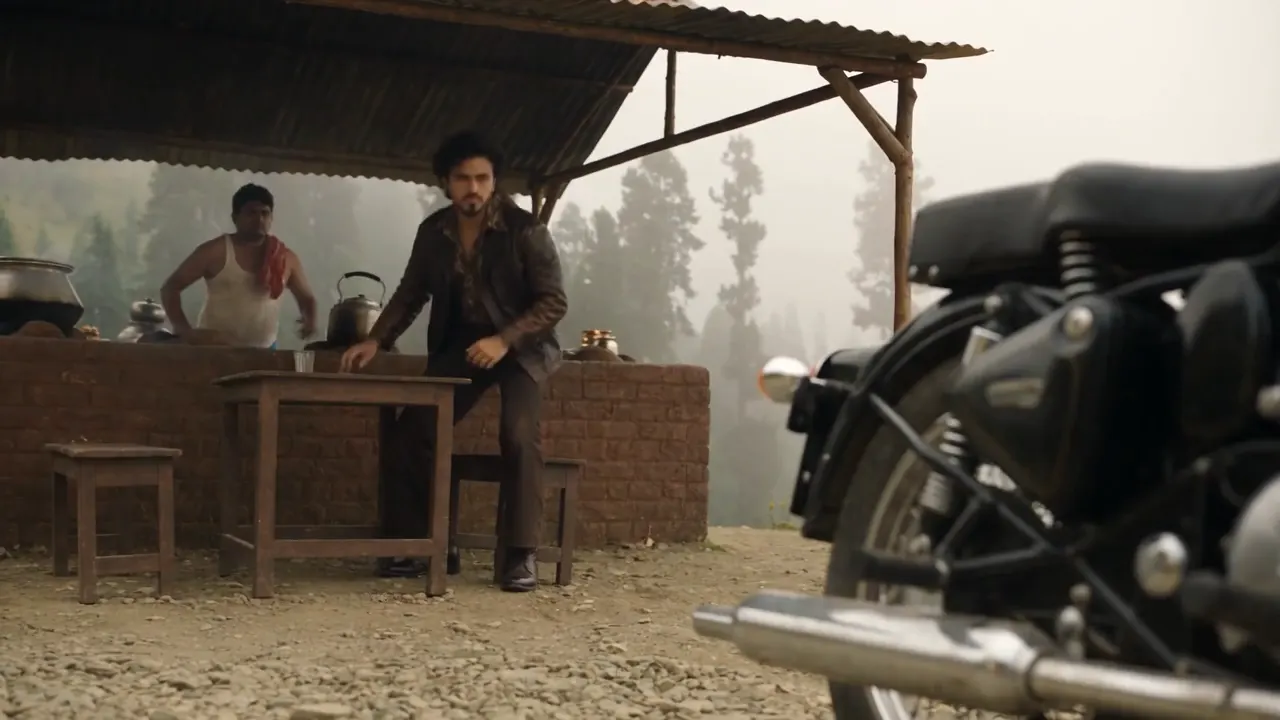
A single saturated colour against a calm field does more than a full palette. In Episode 3 the red jeep and Tara in red sit against mustard fields at golden hour, the kind of contrast that lets one colour lead the eye.
Restraint over declaration
The strongest romantic beats are withheld. A hand that opens instead of a speech. A score, if there is one, that stays under the breath. Let the audience finish the sentence themselves and they remember it as their own feeling, not yours.
From Filmito Originals
How a love story film gets made
One moment, written
You tell us where you met, the joke only the two of you share, the place that matters. A person writes a thirty-second script around one gesture, not a biography, because one gesture is what the screen can hold.
Faces locked from photos
You send 3 to 6 photos per face. From them we build consistent digital versions of you both, so the same two people carry every shot. Any take where a face drifts towards a stranger is thrown out.
Directed for the look
A director writes each shot as a timed prompt: where the eyes go, how far apart the two stand, what to avoid, like a grin replacing a soft smile. The engines render it, and a take survives only if the look lands.
Graded, mixed, delivered
Colour is graded by hand to keep skin warm, and sound is mixed so a breath or a laugh sits above any music. Names and dates go in during the edit. The Original arrives within 24 hours of the brief, ready to play.
What a romance film costs
A proposal video or an anniversary film is a Filmito Original: $350 for 30 seconds, starring the two of you, or family and friends too. It is delivered within 24 hours of the brief, from 3 to 6 photos per face. A longer love story is an AI Film: $2,000 for 2 minutes, $6,000 for 10 minutes.
Where romance on screen needs care
Romance lives in micro-expressions, and that is where generated footage is weakest. A soft smile can tip into a grin, two hands can merge, a held gaze can go glassy. So we build scenes around what holds: profiles, a glance held across a room, two people framed with space between them. A kiss stays short on screen, and the cut leaves before a face can change.
Questions
What people ask about romance and love story films
Can a love story really land in 30 seconds?
Yes, if it chooses one moment. Thirty seconds holds a place, a look, a gesture and a release. Episode 3 does it in 31 seconds with a dusty road, a red jeep and a hand that opens to show what Rudra was carrying. A romance that short cannot explain a relationship, so it should not try. Let the audience fill it in.
What photos do we need for a proposal video?
Between 3 and 6 photos of each face. Clear, evenly lit, a few angles including profiles, since romance leans on side-on glances, with no heavy filters. Photos that show you as you look now work best, because the film should feel like the two of you on the day it plays, not years ago.
Should the proposal happen in the film or in the room?
Usually in the room. The strongest proposal films build to the question and stop before the answer, so the real reply happens live, in front of the screen. Our Originals still of Rudra and Tara, a rooftop proposal at blue hour, shows the setting we reach for: a high place and fading light.
Does a love story this short need dialogue or voiceover?
Rarely. Spoken lines are where romance turns stiff fastest, and a voiceover telling the viewer how the couple feel does the audience's work for them. In 30 seconds, a look held a beat too long and one small gesture say more. If words matter, keep them to one line, placed near the end, where they land as a release.
Can an anniversary film start from the day we met?
Yes, but not as a timeline. Thirty seconds cannot hold years, so we pick one image from that first day, the place, what one of you wore, and one from now. Both are built from the same 3 to 6 photos per face, so the two of you stay recognisable across the years. One return to that place beats a montage of every trip.
How close can the camera get to a kiss?
Close enough for a glance, a hand, a profile against the light. Extreme close-ups of lips and long kisses are where generated faces are least reliable, so we direct around them and reject takes that look off. Restraint helps twice here: it is safer, and it is more romantic.
Filmito
Tell us the moment you remember
A place, a look, the gesture only the two of you would recognise. We will build a 30-second film around it, starring you both.
Since 2017 · 9,700+ films · 4.8 from 970+ reviews on Fiverr